Papua New Guinea’s central bank goes where Australia (so far) refuses to tread

Australia’s central bank, the Reserve Bank of Australia, enjoys a pretty strong international reputation for the quality of its economic research and analysis and its competency in managing monetary policy.
It has lost some of that shine in recent years, not least for the unforced error of providing long-term interest rate guidance that got blown out of the water by the pandemic and subsequent surge in inflation and rates.

It is also facing increasing heat for doggedly holding the official cash rate up when other central banks, most notably the US Federal Reserve, have begun to bring theirs down.

Critics argue that the delay in easing monetary policy risks crushing the economy – a line of attack that was undermined somewhat last week by employment data showing the jobs market remains tight.

The RBA has been going about its day job while simultaneously implementing a suite of changes recommended by the recent RBA Review.

The most visible of these have been in the number of Board meetings it has and the way it communicates with the public.

From the outside, the shift to eight two-day meetings a year (down from 11 one-day meetings) has been seamless, as has the commencement of RBA Governor media conferences following each meeting.

But one of the biggest structural changes – the split of the functions of the current RBA Board into two separate Boards, one focussed on RBA governance/operations and the other solely on setting monetary policy – has become politically marooned after the Opposition decided against supporting the change.

The Dutton-led Coalition’s turn away from bipartisanship on the reform is in step with concerns raised by some former RBA governors, including Ian Macfarlane and Bernie Fraser.[1] Macfarlane has objected to the idea that “six part-timers” could set monetary policy under the change.

He claimed that, “Australia would have the only central bank in the world with a decision-making structure like that. This is placing a lot of faith in the part-timers.”

But that is not quite the case.

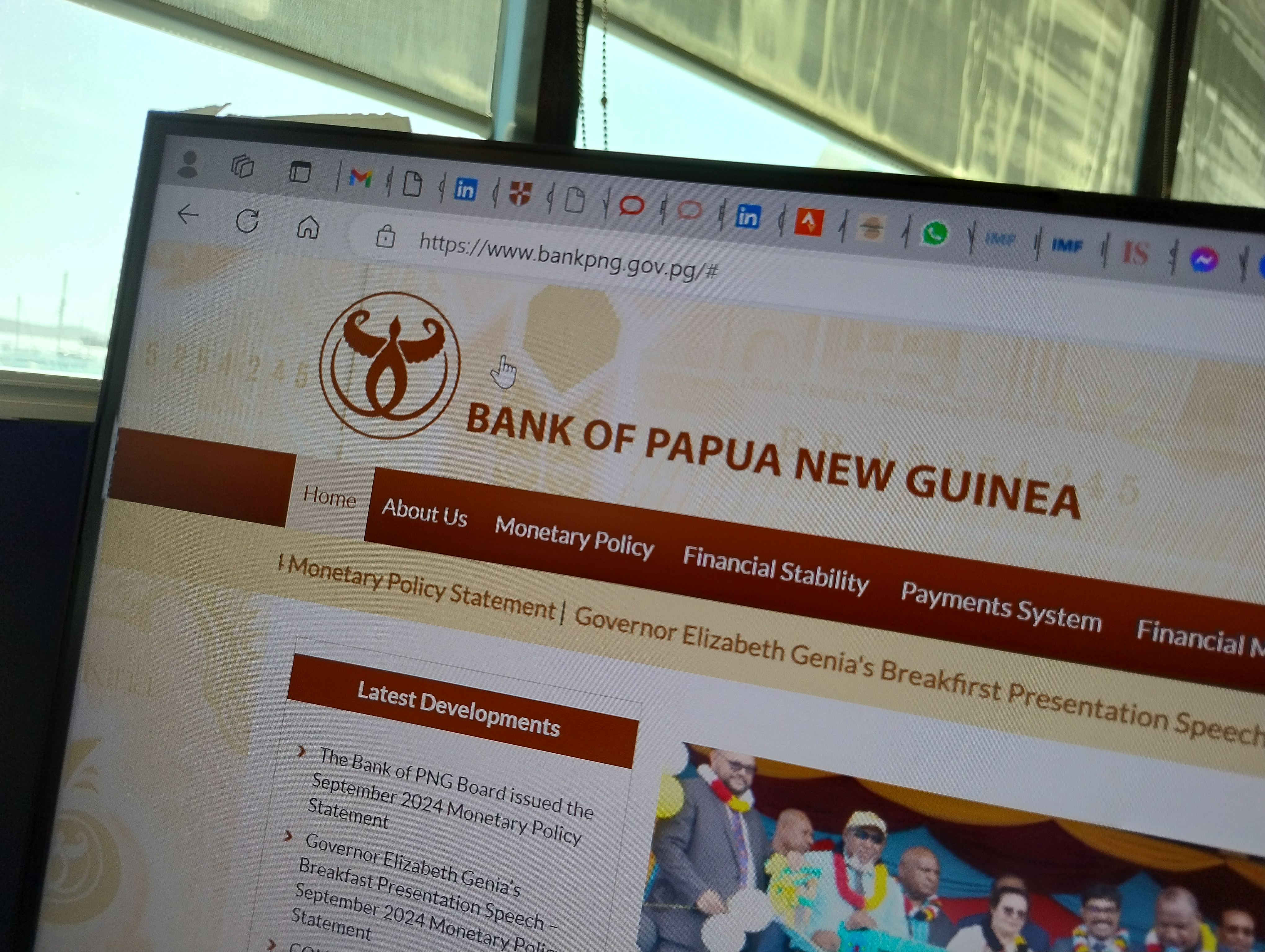
Papua New Guinea has just unveiled reforms to its central bank that include the creation of a specialist five-member Monetary Policy Committee[2]. The change, undertaken at the behest of the International Monetary Fund (IMF), means setting monetary policy will no longer be the sole responsibility of the Bank of Papua New Guinea (BPNG) Governor, but will instead be set by a group including the Governor, the Deputy Governor and three ex-officio members.

Under the changes, the ex officio members will in effect be appointed by the Treasurer and the National Executive Committee (PNG’s equivalent of the Cabinet). One has to be a non-PNG resident recognised as a monetary policy expert while the remaining two have to be PNG residents but do not need monetary policy expertise.

In a further boost to transparency, a Monetary Policy Statement setting out how committee members voted and the rationale for their vote is to be issued following each meeting.

Appointing the Monetary Policy Committee and ensuring it has the right mix of expertise and experience will be a challenge.

But, announcing the change, BPNG Governor Elizabeth Genia said the new arrangement would, “facilitate more robust discussions and decision-making processes in our monetary policy framework”.

The IMF has welcomed the reforms, which it says have “significantly improved the mandate, governance, and autonomy of the BPNG”.[3]

While Australia’s policymakers struggle to agree on reforms to the RBA, in Port Moresby they are just getting on with it.


[1] RBA interest rates board: Ian Macfarlane, Bernie Fraser, Philip Lowe oppose Jim Chalmers’ move to abandon current board structure

[2] Central Banking Amendment Bill 2024.pdf

[3] IMF Reaches Staff-Level Agreement with Papua New Guinea on a Resilience and Sustainability Facility (RSF) Arrangement and the Third Reviews Under the Extended Credit Facility and the Extended Fund Facility

Leave a comment

Filed under Uncategorized

Households hold key to more rate hikes

How consumers respond to the challenging mix of rising living costs and higher interest rates on one side and a strong labour market and increasing wages on the other will go a long way to determining how tight the Reserve Bank fo Australia turns the monetary policy screw.

In his statement announcing a 0.5 percentage point increase in the cash rate to 0.85 per cent, Reserve Bank Governor Philip Lowe made it clear that interest rates will rise further, saying, “The [RBA] Board expects to take further steps in the process of normalising monetary conditions in Australia over the months ahead”.

Mr Lowe says he expects inflation to ease next year back within the 2 to 3 per cent range which is the central bank’s target band. But this is predicated on more rate rises.

The only question is how high interest rates will need to go, and how fast.

Internationally, a lot will need to go right if rate rises are to be modest.

The extreme pressure on global supply chains of food and energy will need to ease and commodity prices stabilise. This will involve many countries currently affected by the supply shock caused by the Ukraine War being able to find alternative suppliers. It will also require food and energy exporters to be able to increase their production, something that climatic conditions and transport systems could impact on.

China’s response to COVID-19 also remains a key point of uncertainty. Though Shanghai is emerging from lockdown and restrictions in Beijing are not as tight for now, as long as China sticks with its Zero Covid policy more lockdowns are a real possibility.

Even if international conditions improve, how Australian households behave over the coming months will be crucial.

Though many households have built up savings and those with equity in the housing market have experienced a significant increase in asset wealth, how they respond to rising prices and interest rates will be telling.

The RBA’s central case is for strong consumption growth this year as many consumers, buoyed by strong savings, high house prcies, a tight jobs market and rising wages, feel comfortable enough to splurge.

If they do, it is likely to mean interest rates will have to go higher than they might otherwise.

But there are good reasons to think that many will act more cautiously. Renters, those on low incomes and those carrying big mortgages, in particular, may all feel good reason to keep a tight rein on spending.

As the Reserve Bank Board deliberates on further rate hikes over coming months, retail spending, household borrowing and credit card statistics will be among the key indicators it will be keeping a close eye on.

Leave a comment

Filed under Uncategorized

It (still) all comes back to productivity

Amidst all the discussions of this week’s interest rate rise and the outlook for inflation, wages and growth, one crucial factor has been largely overlooked: productivity.

It’s an ugly word and can be very tricky to measure.

But it is likely to play a crucial role in how high interest rates go and how well-off we all become.

Productivity is basically a measure of how much is produced for a given level of input (labour, capital and other resources).

When he was Treasury secretary, Ken Henry regularly referred to productivity as one of the three Ps crucial to growth (the others being population and participation).

Productivity is especially important in a high-inflation environment like we have right now. The more that can be produced using a given amount of labour and capital, the cheaper it is to produce.

If there is sufficient competition, this will tend to put downward pressure on prices.

The big problem is that for the 25 years productivity growth in Australia has been mostly weak.

Analysis by the Australian Bureau of Statistics shows that in that time both labour productivity and so-called multifactor productivity (that is, productivity including labour, capital and everything else) has mostly been below 2 per cent.

The last time it reached above that was in 2014-15.

This brings us to the Reserve Bank of Australia’s latest assessment of the economic outlook, which came out on May 6.

In it, the central bank lays out its central case for how it thinks things will turn out.

Broadly, it expects inflation to rise to 6 per cent by the end of the year and only gradually ease back to 3 per cent by mid-2024.

It thinks unemployment will remain low (3.5 per cent), forcing wages and other inducements like bonuses and overtime payments to accelerate to around 5 per cent by mid-2024.

This will support household consumption and growth.

This is what the RBA thinks is the most likely scenario.

But the central bank’s quarterly outlook always includes a section that looks at all the things that could go wrong.

Right now, it is quite a long list – another serious COVID-19 outbreak, ongoing disruptions to global supply chains and tumbling house prices, to name but a few.

But one of the crucial unknowns is productivity.

If it improves significantly, inflation could ease more quickly and real incomes (adjusted for inflation) could grow, boosting prosperity.

There is some cause for optimism here.

Business confidence has increased in recent months and firms are ratcheting up their investment plans. Capital investment has been the most important driver of productivity growth in the most recent cycle, according to the ABS, so the increased willingness of businesses to buy new equipment and technology could deliver an important productivity boost.

But there is ample scope for things to go wrong, as the RBA has acknowledged.

“It is possible that some of the recent changes in spending and production patterns are long-lasting and that these constrain the efficient allocation of resources and, in turn, productivity,” it said.

If that turns out to be the case, then “any given rate of growth could be more inflationary than before the pandemic”.

And if wages increase in the absence of an improvement in productivity, the consequent boost to household spending will likely result in “inflation being sustained at a higher rate than currently anticipated”.

That would inevitably mean that interest rates have to go higher for longer.

So boosting productivity will be key if the nation is to avoid high interest rates and cost-of-living pain.

There are plenty of things that governments can do to help achieve this, like ensuring a welcoming environment for investment (local and international), encouraging greater workforce participation through measures like improving access to affordable child care and investing in education.

For the past decade, progress on any of these has been woeful, and in several cases has gone backwards.

Whoever wins the election needs to make enhancing productivity a top priority.

Our future prosperity depends on it.

Leave a comment

Filed under Uncategorized

Plenty of sting in RBA tale

Hopes that it may only take a moderate lift in interest rates to calm inflation have been dealt a blow by the Reserve Bank of Australia.

While the RBA Board’s decision at its May 3 meeting to raise the cash rate by 0.25 of a percentage point had been widely anticipated, much more interesting – and worrying, if you happen to be a borrower – is what RBA Governor Philip Lowe and the RBA think is in store for the country over the next couple of years.

Like a pulp fiction mystery author, Dr Lowe left it until two-thirds of the way through his monetary policy statement to make remarks that will make mortgage holders across the country nervous.

After offering some reassuring words about an expected eventual easing in inflation to within the central bank’s 2 to 3 per cent target band, the RBA Governor then slipped in the metaphorical sucker punch.

He warned that the RBA expects headline inflation – currently at 5.1 per cent – to hit 6 per cent this year (and underlying inflation 4.75 per cent) and not moderate to around 3 per cent until mid-2024. That is two whole years away.

The real kicker came in the Governor’s next sentence: “These forecasts are based on an assumption of further increases in interest rates”.

So, barring a highly unlikely plunge in inflation in the near-term, several more interest rates rises are on the way.

While no-one, including the RBA, knows how high they will need to go, the RBA’s worrying language surely opens the way for the cash rate to hit 2.5 per cent or more.

The particular twist in this tale is that the RBA is detecting signs of a long-awaited acceleration in wages.

While this will be good news for millions of wage earners who for the past decade have had to get by on stagnent salaries, it suggests that the domestic demand pressures contributing to inflation are unlikely to ease any time soon.

A lot will be riding, instead, on improving global energy and food supplies and unglogging supply chains and clearing shipping backlogs.

For that, we all better hope that Ukraine war does not spread and that our vaccines can handle future COVID-19 mutations.

Leave a comment

Filed under Uncategorized